The direct answer
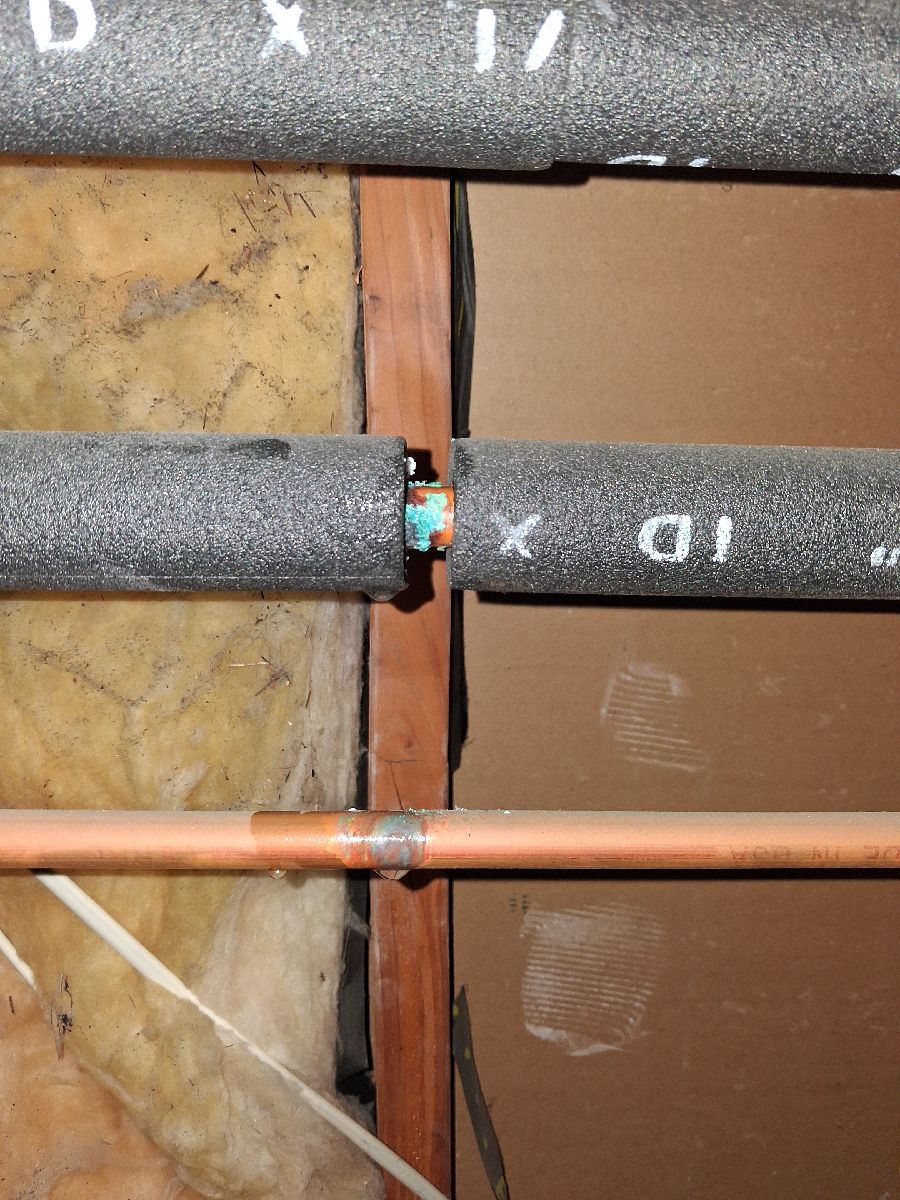
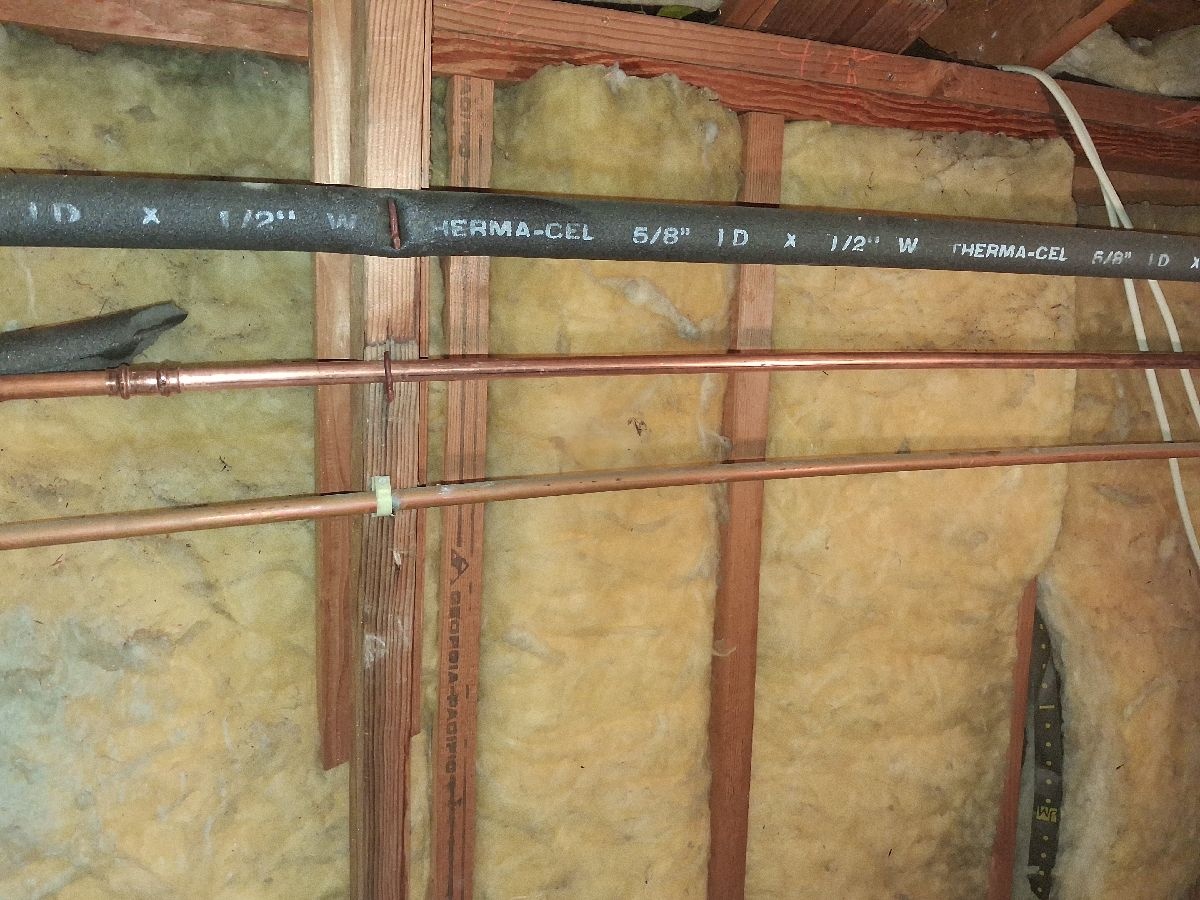
This sequence documents a localized hot-water copper repair stage. It shows visible corrosion at exposed piping and a later replacement section. The open access is part of the record; the photographs do not establish final testing, drying or ceiling restoration.
Read the two visible stages
The earlier view shows green corrosion on accessible hot-water piping near the insulation. The later view shows a localized copper replacement through the open access. Keeping the two views together helps an owner understand which part of the physical condition changed.
Keep the repair boundary honest
The record supports a local repair example. It does not establish that every concealed line was inspected, that a whole-building repipe was needed, or that the repaired property had no other source of moisture. No project location, customer name or outcome beyond these stages is claimed.
A separate AWC video discusses material preferences. It is not footage of this repair and should not be used to infer the connection method shown here.
Ask what releases the next trade
Before the opening is covered, the owner needs more than a photo of installed pipe. The responsible trade should identify its completed scope and verification. Affected materials need their own decision, including any further review or access still required. An opening left for ventilation is not a measured drying result.
Use the example to improve your proposal
Ask your proposal to connect four items: the repaired section, access and protection, the required verification, and the finished ceiling or wall boundary. Request the relevant connection photos before closure. If findings expand the work, require the new boundary to be explained before approving it.
This sequence is useful because its stopping point is visible. A complete scope should make the next stopping point just as clear.
Sources & further reading
- AWC: Drywall Need To Be Opened After A Leak?
- EPA: A Brief Guide to Mold, Moisture and Your Home
- Watch AWC: Austin’s perspective on copper, PEX and press fittings
Codes, product instructions and local requirements vary by assembly, permit and jurisdiction. Confirm the applicable requirements for the property.
Make the next conversation useful.
Start with a wide view, a close view, when the condition occurs, and what has already been tried. Keep customer names, access codes and unrelated private records out of photos.
Plan the evaluation →